How Many Calories is Nasi Lemak?
A basic nasi lemak bungkus is around 556 kcal. A kopitiam plate with ayam goreng and a teh tarik? You are looking at 1,200 to 1,300 kcal for breakfast. Here is every component weighed and counted, from the coconut rice to the last peanut.
Just want the quick numbers? Grab the nasi lemak calorie card, or browse the full Malaysian food calorie database.
Nasi lemak is the national breakfast. You grow up with it. Your mum packs it in banana leaf. You eat it before exams, after late nights, at 6am roadside stalls. It is cultural, it is delicious, and if you are trying to lose weight without understanding what is actually in it, it is quietly wrecking your deficit every single morning.
The issue is not that nasi lemak is some kind of evil food. It is that people massively underestimate it. I hear this all the time: "I only had a small bungkus for breakfast, then I ate quite light." And then when I ask what "quite light" means, it turns out they had a full kopitiam plate with ayam goreng at 8am, a teh tarik on the side, and then wonder why the scale is not moving.
Let us actually look at the numbers. Every component, weighed, with real food composition data. No rounding things in your favour.
The standard bungkus: component by component
A standard roadside or morning market bungkus contains these components. I am using average quantities here because bungkus portions vary by stall. I will note where variation is significant.
- Nasi lemak rice: 130g cooked. Not plain rice, this is rice cooked in coconut milk with pandan leaves. The coconut milk absorption makes it significantly more calorie dense than plain white rice.
- Sambal: 40g. The chili paste with fried shallots, belachan, sugar, and oil cooked together. Every stall's sambal is different but they all use oil and sugar as the base.
- Ikan bilis (dried anchovies, deep fried): 15g. Tiny amount by weight but very calorie dense because they are deep fried and have absorbed oil.
- Fried peanuts: 18g. About a small handful. This one catches people off guard. Peanuts are one of the highest calorie foods by weight that exist.
- Cucumber: 30g. Three thin slices. Basically no calories. Good to add volume but it is not doing much work here.
- Half a hard-boiled egg: 28g. Standard for a bungkus. Full egg at the kopitiam.
Full calorie breakdown: standard bungkus
Numbers from Singapore's Health Promotion Board food composition database (HPB), the Malaysian Nutrient Database (MyNutri), and USDA food data. Where sources differ, I used the more conservative (lower) estimate.
| Component | Amount | Calories | Protein | Fat | Carbs |
|---|---|---|---|---|---|
| Nasi lemak rice (cooked in coconut milk) | 130g | 217 kcal | 3.9g | 6.5g | 33.8g |
| Sambal (oil + sugar are the base) | 40g | 130 kcal | 1.8g | 9.0g | 10.0g |
| Ikan bilis (deep fried) | 15g | 60 kcal | 8.5g | 3.0g | 0.5g |
| Fried peanuts (deceptively small, very calorie dense) | 18g | 105 kcal | 4.8g | 8.8g | 3.6g |
| Cucumber (sliced) | 30g | 5 kcal | 0.3g | 0g | 1.0g |
| Hard-boiled egg (half) | 28g | 39 kcal | 3.2g | 2.7g | 0.3g |
| Total (standard bungkus) | ~261g | 556 kcal | 22.5g | 30.0g | 49.2g |
556 kcal for a bungkus, and 30g of fat. The protein is only 22.5g. For context, a plain plate of chicken rice (no skin) is around 450 kcal but gives you 35 to 40g of protein. Nasi lemak gives you more calories for less protein. That is not a dealbreaker, but it is worth knowing.
Why the rice has more calories than you think
Plain cooked white rice is about 130 kcal per 100g. Nasi lemak rice, cooked in coconut milk, is around 167 kcal per 100g. That is 28% more calorie dense, gram for gram.
Here is why. During cooking, the rice absorbs the cooking liquid. With plain rice, that liquid is water (zero calories). With nasi lemak rice, the liquid is a mix of water and coconut milk. Full-fat coconut milk contains about 230 kcal per 100ml and 24g of fat per 100ml. Some of that fat and those calories get absorbed directly into each grain of rice as it cooks.
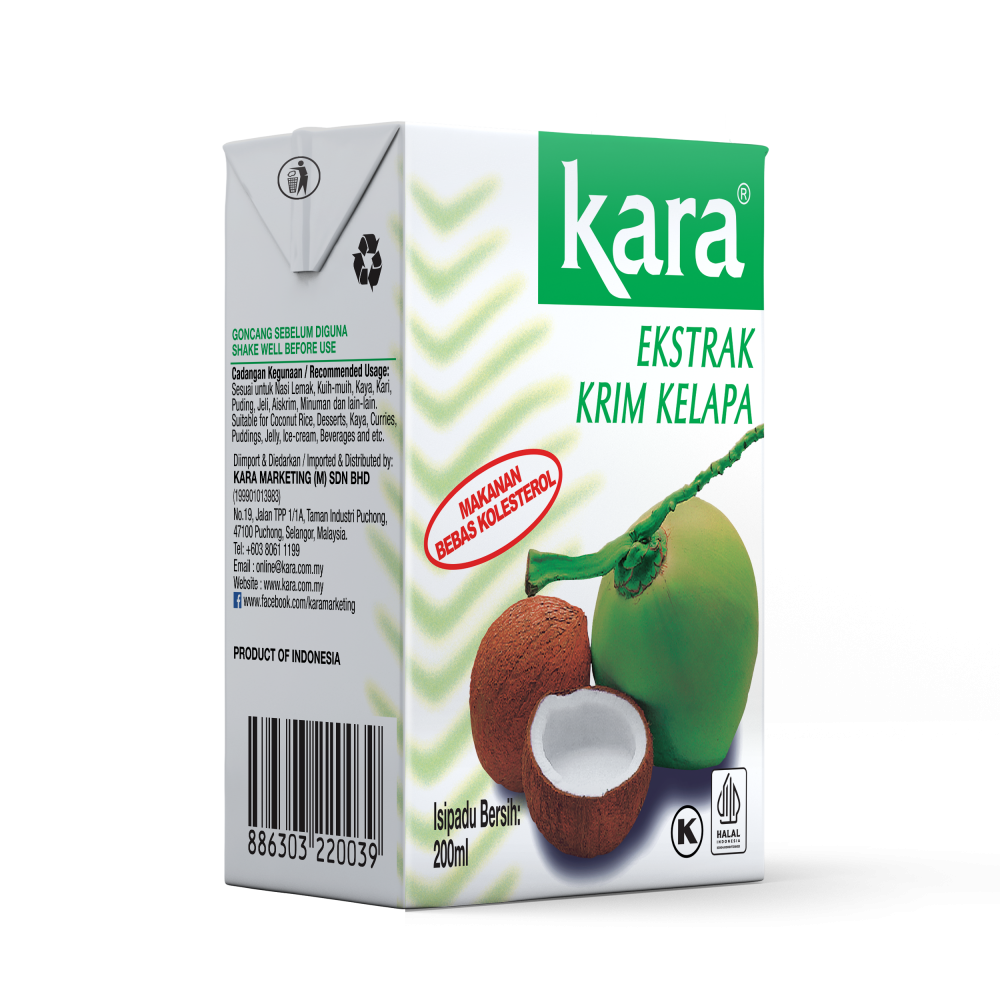
A typical home recipe uses about 200ml of coconut milk to cook 400g of raw rice, which makes about 1kg of cooked nasi lemak rice. That 200ml of coconut milk adds about 460 calories across the entire batch. Per 100g serving of finished rice, that works out to roughly 46 extra calories compared to plain rice cooked the same way.
Combined with the carbohydrates in the rice itself, you get to about 167 kcal per 100g. For the 130g bungkus portion, that is 217 kcal just from the rice. Plain rice at the same portion would be 169 kcal. The coconut milk costs you an extra 48 kcal per bungkus. Not enormous on its own, but it compounds across everything else on the plate.
The peanut problem
The most underestimated thing on a nasi lemak plate is the peanuts. They look like a garnish. They taste like a garnish. Nobody thinks of them as a significant calorie source. But bro, fried peanuts are 600 calories per 100g.
600 calories per 100g. That is almost the same as butter (717 kcal per 100g). Raw peanuts are 567 kcal per 100g and frying them absorbs even more oil. The 18g of peanuts in a standard bungkus contributes 105 calories. That is the same as eating a whole extra medium banana on the side, except you do not even notice it because peanuts are scattered across the plate and you eat them between bites of rice.
At the kopitiam where you serve yourself, the portion of peanuts is much larger. 30 to 40g of peanuts is normal when you are scooping them yourself. At 40g, that is 240 kcal from peanuts alone. More than the egg and ikan bilis combined.
What is actually in the sambal
Sambal varies hugely between stalls, but the base structure is the same everywhere. You fry shallots and garlic in oil, add blended dried chili paste, add belachan, add sugar, add tamarind juice, and cook until dark and thick.
The calorie density of sambal comes from two things: the oil used to fry it and the sugar added to balance the heat. A standard nasi lemak sambal recipe uses about 150ml of oil and 80g of sugar per 800g of finished sambal. That is roughly 1,200 calories from oil and 309 calories from sugar in the batch. Spread across the batch, the sambal comes out at about 300 to 340 kcal per 100g.
Your 40g spoonful of sambal on the bungkus: 120 to 136 kcal. I used 130 kcal in the table. At the kopitiam where you might take 55g (a more generous spoon), you are at 180 kcal from sambal alone.
Spicy does not mean low calorie. That is one of the most common misconceptions I hear. The heat from the chili is essentially zero calories. The problem is everything the chili is cooked in.
Kopitiam plate: the proper sit-down version
The kopitiam nasi lemak plate is a different beast from the bungkus. More rice, more sambal, more peanuts, a whole egg, and usually at least one piece of lauk. Here is what the base kopitiam plate (no lauk yet) looks like.
| Component | Amount | Calories | Protein | Fat | Carbs |
|---|---|---|---|---|---|
| Nasi lemak rice | 200g | 334 kcal | 6.0g | 10.0g | 52.0g |
| Sambal | 55g | 179 kcal | 2.5g | 12.4g | 13.8g |
| Ikan bilis (deep fried) | 20g | 80 kcal | 11.3g | 4.0g | 0.7g |
| Fried peanuts | 30g | 175 kcal | 8.0g | 14.7g | 6.0g |
| Cucumber | 50g | 8 kcal | 0.3g | 0g | 1.5g |
| Hard-boiled egg (whole) | 55g | 78 kcal | 6.3g | 5.3g | 0.6g |
| Total (kopitiam, no lauk) | ~410g | 854 kcal | 34.4g | 46.4g | 74.6g |
854 kcal before you add a single piece of lauk. And 46g of fat, which is already close to a full day's fat intake for someone on a moderate cut.
Every lauk, with calories
This is where people really lose the plot. You see the nasi lemak plate, the rice and sambal seem like the main event, and the piece of ayam goreng on the side feels like a reasonable addition. It is not a side dish. A piece of fried chicken is almost another full meal on top of the 854 kcal base.
Here are the most common nasi lemak lauk options with their approximate calorie counts. These are for typical hawker portion sizes.
| Lauk | Typical portion | Calories | Protein | Notes |
|---|---|---|---|---|
| Ayam goreng (fried chicken thigh, bone-in) | 1 piece (~120g with bone) | ~250 kcal | 24g | Skin adds ~50 kcal. Remove the skin and you drop to ~200 kcal. |
| Rendang daging (beef rendang) | 80g | ~210 kcal | 18g | Coconut milk and oil-heavy. Very calorie dense per gram. |
| Ikan goreng (small whole fried fish) | 80g edible | ~160 kcal | 22g | Good protein-to-calorie ratio. Better choice than ayam if you are watching. |
| Sambal udang (prawn sambal) | 80g | ~145 kcal | 14g | Prawns are lean; most of the calories are from the sambal sauce. |
| Sambal sotong (squid sambal) | 80g | ~120 kcal | 13g | One of the lower calorie lauk options. Squid is very lean. |
| Telur masak merah (egg in spicy tomato gravy) | 1 whole egg + gravy | ~140 kcal | 7g | The tomato gravy adds about 60 kcal on top of the egg. |
| Telur dadar (fried egg omelette) | 2 eggs, pan fried | ~200 kcal | 12g | Oil used for frying adds 40 to 60 kcal. Looks light, is not. |
| Tempe goreng (fried fermented soybean) | 60g | ~145 kcal | 10g | Oil absorbed during frying is the main calorie source. |
| Tahu goreng (fried tofu) | 80g | ~130 kcal | 9g | Tofu absorbs a lot of oil when deep fried. Similar to tempe. |
The full damage: three real scenarios
Let me put this together into scenarios that actually reflect how people eat nasi lemak.
Scenario 1: Basic morning bungkus
Standard bungkus with rice, sambal, ikan bilis, peanuts, cucumber, half egg. No lauk, no drink. A completely reasonable breakfast if the rest of your day is managed. Protein is only 22.5g though.
Scenario 2: Kopitiam plate, no lauk, teh tarik on the side
Kopitiam plate (854 kcal) plus a teh tarik with condensed milk (approximately 130 kcal). Just under 1,000 calories for breakfast, before 9am. Most people who eat this would describe it as a "normal breakfast."
Scenario 3: Kopitiam plate, ayam goreng, teh tarik
Kopitiam plate (854 kcal) plus ayam goreng with skin (250 kcal) plus teh tarik (130 kcal). For someone on a 1,800 kcal daily target, this single breakfast uses 68% of the entire day's budget before 9am. You would need to eat only about 566 kcal across lunch and dinner to stay on target. That is basically nothing.
Scenario 3 is not unusual. This is a completely normal, everyday breakfast for a lot of Malaysian men. If you are wondering why the scale is not moving despite eating "clean" during the rest of the day, this right here might be the answer.
The drink you forgot to count
Nasi lemak almost always comes with a drink. And drink calories in Malaysia are absurd.
| Drink | Standard serving | Calories | Notes |
|---|---|---|---|
| Teh tarik (with condensed milk) | 250ml mug | ~130 kcal | About 25g condensed milk, which is 80 kcal on its own |
| Teh tarik (extra manis) | 250ml mug | ~170 kcal | More condensed milk. Taste difference is subtle, calorie difference is real. |
| Milo panas (with condensed milk) | 250ml | ~180 kcal | Milo powder plus condensed milk. People think it is healthy. It is not low calorie. |
| Kopi O (black coffee, no milk) | 200ml | ~30 kcal | The sugar is the calorie here. Ask for kurang manis or kosong. |
| Plain water | Any amount | 0 kcal | Free, zero calories, keeps you full, does not raise insulin. The obvious choice but nobody orders it. |
Switching from a daily teh tarik to a kopi O kurang manis saves about 100 kcal per breakfast. Over a year, that is 36,500 kcal, which is more than 5kg of body fat. Just from one drink swap. That is not a small number.
Can you eat nasi lemak and still lose weight?
Of course you can. Nothing is off limits in a calorie deficit. The question is just what you are willing to adjust around it.
Here is the honest framework:
The bungkus version is manageable. At 556 kcal, a morning bungkus uses about 30% of a typical 1,800 kcal daily target. That leaves 1,244 kcal for the rest of the day. Completely workable. Have a light lunch (canned tuna with vegetables, about 200 kcal) and a moderate dinner (chicken and rice, about 700 kcal) and you are at 1,456 kcal for the day. Still in deficit with some buffer.
The kopitiam plate with lauk is a different game. At 1,000 to 1,200 kcal for breakfast alone, you are basically using your entire deficit's worth of food before noon. It can still work, but only if you eat very little for the rest of the day and that is a miserable way to live.
The drink matters more than people think. Dropping the teh tarik for water or kopi O saves 100 to 150 kcal instantly. That is the easiest single change you can make to a nasi lemak breakfast without changing anything about the food itself.
Lauk swaps have a big impact. If you normally order ayam goreng, swapping to ikan goreng saves about 90 kcal and gives you more protein. Sambal sotong instead of rendang saves about 90 kcal too. These feel like small differences but across five nasi lemak breakfasts a week, that is 450 kcal per week, or about 23,400 kcal per year.
The quick reference
For calorie tracking, use these numbers:
| Scenario | Calories to log |
|---|---|
| Basic bungkus only, no drink | 550 to 580 kcal |
| Bungkus with teh tarik | 680 to 730 kcal |
| Kopitiam plate, no lauk, no drink | 820 to 890 kcal |
| Kopitiam plate with ayam goreng | 1,060 to 1,150 kcal |
| Kopitiam plate, ayam goreng, teh tarik | 1,180 to 1,300 kcal |
| Kopitiam plate, rendang, teh tarik | 1,150 to 1,250 kcal |
If in doubt, round up. Hawker portions are inconsistent and it is better to slightly overestimate than to think you are in a deficit when you are not.
Nasi lemak is not the enemy. It is an honest, flavourful, nutritious Malaysian breakfast. But it is a meal that earns its calorie count, and it needs to be tracked like one. Treat it like a proper meal, plan the rest of your day around it, and you can keep eating it for the rest of your life while still losing weight.
Just maybe not with the teh tarik extra manis every day lah.